
What the quarantined passengers of the Hondius show about trust in outbreak response
In June, a retired French couple marked a birthday in a sealed hospital room in Paris. Roland and Julia Seitre had been passengers on the MV Hondius, the expedition ship where Andes hantavirus spread last spring. Both were healthy, with every sample negative so far. They told France Inter that they had expected a few days in hospital followed by quarantine at home, and that a month later they were still in the room. Roland Seitre pointed out that English, Dutch, Belgian and German passengers from the same ship were spending the same six weeks at home, and asked what the medical difference was. The couple had written twice to their Ministry of Health and were still waiting for a reply.
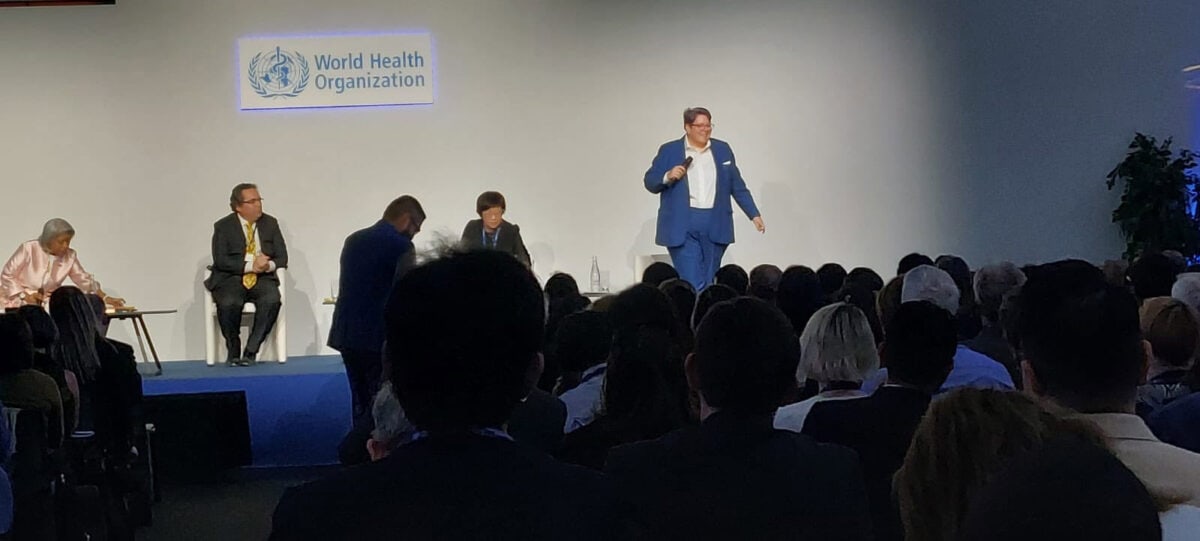
I thought of them this week in Stockholm, at the opening of ESCAIDE, Europe’s conference on applied infectious disease epidemiology. The keynote, by Shingai Machingaidze of the vaccine coalition CEPI, was about the 100 Days Mission, an international effort to have vaccines, treatments and diagnostics ready within 100 days of a new pandemic threat. She described its early obstacles as failures of institutional design, which people can change, and cited this year’s Global Preparedness Monitoring Board report on trust and equity as the weak points of preparedness.
As I listened, I remembered following the Hondius story last spring. I kept noticing how differently the passengers were treated depending on the country they went home to, and how little we heard about what those weeks were like for them. The keynote made me think about the time before a vaccine exists, when the main tools are public health and social measures such as quarantine. Quarantine was the right decision after the Hondius, where three passengers had died. How it is organized, and how people are treated while they are in it, are design choices too. I think they deserve the same attention we give to vaccines.
Passengers in quarantine carried the response for everyone else
ECDC assessed the risk of this outbreak to the general population of the EU and EEA as very low. It stayed that way in part because the people who had been on board, and their contacts, each gave up six weeks of their lives.
In ECDC’s guidance these people are high-risk contacts, with instructions for how they should be managed. Those terms do their job, which is to classify an exposure and tell health authorities what to do. The same people were also doing more than anyone else to keep the outbreak small, yet they were rarely described that way in public. A Spanish passenger, herself a doctor, said afterward that a regional politician had presented the passengers as a danger to the population, and that she felt the group was seen as rich travelers who could look after themselves. People who give up six weeks to protect others can reasonably expect recognition, along with a clear account of how they will be supported.
Guidance on paper and quarantine as people lived it were not the same
ECDC’s advice on managing the passengers was thoughtful. It recommended six weeks of quarantine at home, time outdoors to protect mental health, at least weekly follow-up of physical and mental health, and access to psychosocial assistance. It warned that passengers could face stigma.
Countries then applied the same advice in different ways. The Seitres spent a month in a sealed room in Paris. The Spanish doctor spent four weeks in a military hospital in Madrid after expecting a few days. Passengers in the Netherlands went home with the municipal health service monitoring and supporting them. However careful the official record, people experience a measure as an interruption of their lives. The size of that interruption depended on the country they returned to.
The Dutch Minister of Health told the national parliament that she had weighed the risk against proportionality, that six weeks at home has an enormous effect on a person’s life, and that quarantine at home was chosen to limit that effect. Her reasoning was a clear lesson from the pandemic, applied in a new outbreak. I think we give decision makers like her strong evidence about the pathogen and much less about how a measure is lived. Weighing proportionality is harder without that evidence.
People carry their experience of one outbreak into the next
In the same debate, the minister said the images from the ship reminded everyone of the COVID-19 period. People do not reset their beliefs, opinions and values for each new emergency. They bring what earlier ones taught them about how authorities treated them.
The Dutch public health institute RIVM followed how such judgments formed during COVID-19. The share of participants in its behavioral research who saw the government’s policy as fair fell from about 80 percent to about 50 percent, which RIVM’s researchers linked partly to a perception that burdens were unequally shared. In its lessons from the pandemic, RIVM advised governments to weigh the mental, social and financial consequences of a measure in advance, because people will otherwise weigh those consequences themselves.
So far this week, I have heard trust discussed mostly as a task for communication. Communication is part of it. The passengers’ experience suggests that trust also depends on how the response treats people: how much a measure asks of them, whether passengers from the same ship are treated alike in France and in the Netherlands, and whether someone replies when they write to the authorities, as the Seitres did. The accounts people give afterward, to journalists and to each other, come from those experiences.
People can now compare, within hours, how different countries treat passengers from the same ship. During COVID-19 we saw how hard it is for people to accept a rule that changes at a border when the difference goes unexplained. RIVM’s research found that people often care more about decisions being well reasoned and openly explained than about getting the outcome that suits them best.
Whether people accept a vaccine is often described as the last mile of a response. RIVM found trust in government to be an important predictor of willingness to be vaccinated. A vaccine delivered on day 100 will be offered to people whose view of the response was formed in the weeks before it, and in the outbreaks before that.
Three things public health institutions can do before the next quarantine (or other PHSM)
- When countries apply the same advice in different ways, public health institutions in each country can explain why their decision differs from their neighbors’ and why it is applied as it is locally. Roland Seitre’s question about the medical difference was one a public health institution could have addressed and answered.
- A European agency such as ECDC can study how measures are lived while they are in force, quickly and together with national public health institutes and EU joint actions, and pass the findings to the people who decide, next to the risk assessment. Several countries tracked how people responded to measures through COVID-19, each in its own way. We know more about the Netherlands, Germany or Denmark separately than about how the same measure is lived across Europe.
- Support can be treated as part of the measure, as ECDC’s advice did for mental health. In COVID-19, people facing financial hardship were less likely to isolate fully. Income, work and care duties sit with other ministries and with municipalities, so the arrangements need to be made with them before an outbreak.
My coauthors and I wrote earlier this year that people grant trust, while institutions build trustworthiness through how they act. Success in the next outbreak would be a passenger who knows on the first day how long quarantine will last, where it will be spent, what support comes with it, and who will reply when they write to the authorities with a question, as the Seitres in France did twice.
This article was first published on LinkedIn.