

You can’t stockpile trust
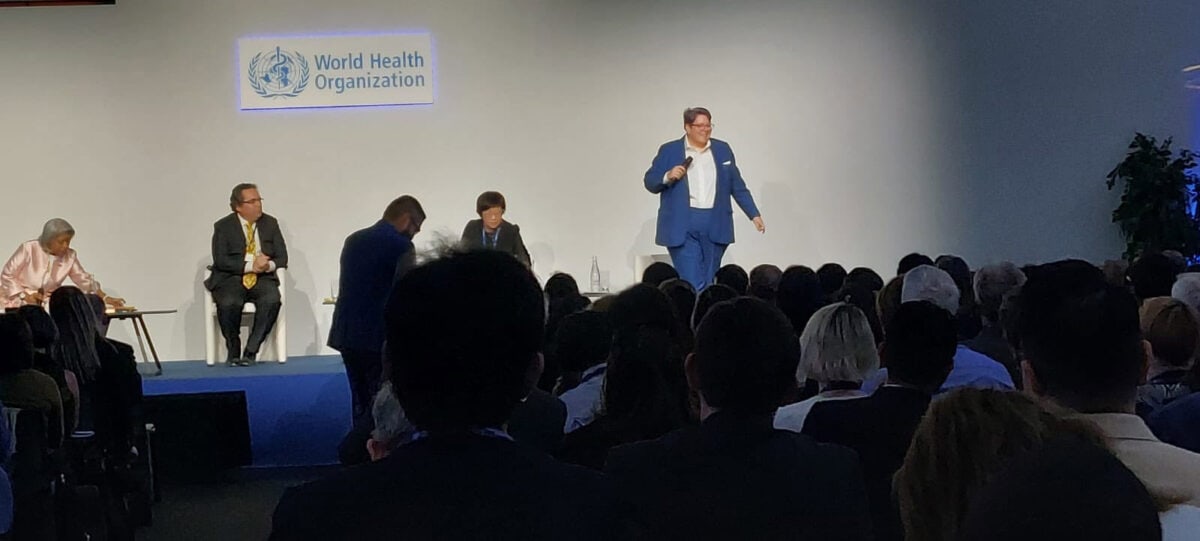
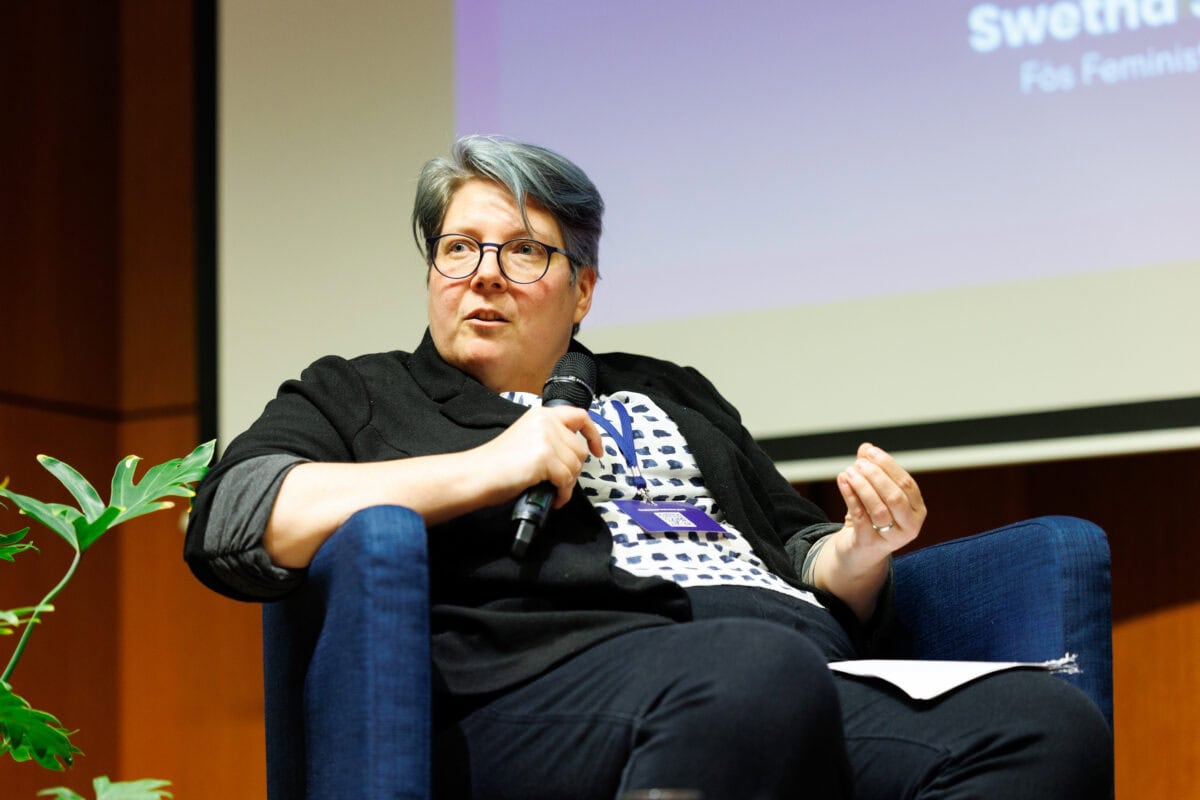
Today I spoke at ESCAIDE 2026 in Stockholm, in the plenary panel “Communication to (re)build trust in science”.
I so enjoyed how the three talks complemented each other. Anders Hviid of Statens Serum Institut shared his personal experience as a scientist caught up in a politicized geopolitical moment and a media swarm after his study of aluminium in childhood vaccines. Steven Van Gucht of Sciensano gave us a proper masterclass in science and risk communication, drawn from his years as Belgium’s federal COVID-19 spokesperson.
I really recommend that you register for the conference’s online platform and watch the talks. I share mine below.
I was asked to zoom out from the personal experiences Anders and Steven shared, and to speak more broadly. Just to provide some context, I am Slovenian, educated in Europe and the US, having served as an international and European civil servant in health, and learned from colleagues working in many places globally.
Trust can’t be stockpiled
If you work in emergency preparedness and response, there is a lot you can stockpile. Gloves. Medical countermeasures like vaccines and antibiotics. You can plan mass treatment sites, or write a surge staffing protocol. The open secret of our field is that so much of preparedness is about moving people and materials around, and training people to handle everything from chemical and radiological events to infectious disease outbreaks.
But you know what you can’t stockpile? Trust.
It’s finite, it’s easy to lose, and it is very slow to grow back. And in an emergency, mistrust costs lives. It makes the response harder and less effective.
As we heard from Steven, trust is built before a crisis. And we can build it by changing three things we already know we need to improve.
In after-action reviews of large outbreaks, the same three areas come up again and again: better communication, better coordination, and more and better leadership.
Politicization makes all three harder, and the erosion of trust is the result.
Digital spaces are now health spaces
At the same time, people now look for health information in digital spaces, and they expect their governments to be there too. Healthcare itself is increasingly delivered digitally.
So disruption in digital spaces is a health problem. Cyberattacks on hospitals across Europe have interrupted care. Online discourse can do harm too. It can stigmatize groups of people. It can feed distrust in governments and in health advice. It can talk people out of healthier choices. And it can amplify harassment and abuse of health workers. One in three doctors and nurses in the EU, Iceland and Norway reported bullying or violent threats at work in the past year.
All of these sit at the intersection of trust, preparedness and digital engagement, and all of them are political. Recent experience has shown us that our health systems are not yet ready for them.
You probably know the estimate that it takes on average 17 years for research evidence to reach health practice. In preparedness and response, we can’t afford that delay. Consider that the internet at consumer scale is only about 30 years old, and it has already gone through four or five different business models and architectures.
Our information environment has changed dramatically, and in many ways our health systems are still organized as if it were the 1990s. For example:
- Health professionals and scientists remain highly trusted in Europe.
- Trust is lower for national authorities, and even lower for journalists.
- Across 19 EU countries, just over half of people are confident their government could protect them in a large-scale emergency. There’s huge variation, from 82% in Finland to 30% in Greece.
- Institutional authority can’t be assumed. It depends heavily on context.
- Two thirds of Europeans say they came across disinformation in the past week. More than a third follow influencers or content creators, and among 15-to-24-year-olds it’s about three quarters.
A university student today lives in a very different information environment from their parents, and from their grandparents. So how do we design health systems and preparedness for that reality?
What we teach, and why it hasn’t been enough
Here’s what we say and teach to do in an emergency. Listen to communities. Develop and test different message frames. Communicate uncertainty. Use trusted messengers in different communities. And adapt to the modern information environment by going to digital channels first.
All of that is right. I’ve taught most of it, and people like Steven did it under extraordinary pressure. So why hasn’t it consistently worked as well as we hoped?
These interventions share an assumption. They treat the problem as one of information transmission, between a health authority and a person who is supposed to do something specific. Stay inside during a wildfire. Don’t take antibiotics for a viral infection.
That framing puts the problem onto the person on the receiving end. It leaves out all the reasons someone may not be tuned in to what the health authority says, may not trust it, or may not want to act on it.
And the environment gets in the way. Trust is fragmented. People are as likely to trust their friends and family as the health experts. And sadly, the algorithms are not kind to boring, evidence-based health advice from your local institute of public health. We’re up against memes, viral dance videos and up-to-the-minute news that make people’s phones ping. Competition for attention is fierce, and the platforms have learned to make money from it.
And going digital first has a blind spot. The people most at risk in an emergency are often the hardest to reach online: older people, people with disabilities, people without a reliable connection, people who don’t speak the national language. Going digital first with the public has to come with a plan for the people most at risk whom it leaves out.
So how do we do better? Every preparedness plan needs a communication plan. But a communication plan only works if it is backed by change in the three areas the after-action reviews keep pointing to. Rethink communication. Rethink who we coordinate with. And lead in a way that earns trust.
Rethink communication
We need more kinds of science at the table. Behavioral science, social science, information science. Right now we tend to bundle them all into the communication function in preparedness.
In my own experience in the civil service, and as an information scientist, that bundling sells short the value of these scientific fields. They can inform much more than communication and community engagement. They can help us judge whether the public health and social measures we’re considering are acceptable to the people who will live with them. They can measure the unintended harms of those measures on different groups. And they can tell us how people feel about the medical countermeasures that come out of hard work, innovation and evolving basic science.
Used this way, these scientific fields also build equity into preparedness, in planning and in implementation. For example, during a large outbreak, advice to stay home assumes people can work from home and have room to isolate. Knowing who can’t, before the crisis, changes the planning itself, as well as the messaging about it.
Communication teams have carried far too much of this on their own. What we need is to rethink how we use evidence, how we make decisions, and how we build our own systems.
Rethink who we coordinate with
When it comes to coordination, we need to go beyond the usual suspects. Coordinating a network of networks, or hosting a webinar, doesn’t automatically build trust.
Trust has three ingredients: competence (meaning the skills and expertise), benevolence (meaning that we act in people’s interest), and integrity (meaning that we do what we say).
In practice, this means giving up some control. It means trusting others, people who command authority and already have their communities’ trust, to take what public health institutions want to say and reframe it in their own way, through their own networks: digital patient navigators, health mediators, community organizations, pharmacists, teachers, health worker creators, and partners we haven’t thought of yet.
We do need to do this carefully, because partners can be politicized too. When a health topic becomes politicized, there’s very little a public health institute can do about it directly. We can indeed defend the integrity of our work through scientific process. Beyond that, partners who carry and reinforce health guidance can do much more good than our own efforts to argue against the politicization of our work. We saw this in Anders’ example where it was important for the editor in chief of the scientific journal to speak up, as well as others.
And these relationships can’t be built in the week an outbreak starts. They have to be in place, and funded, well before it.
Lead in a way that earns trust
Working through partners is also a way of sharing leadership.
For me, leadership means committing our institutions to act on what we learn about people’s needs and experiences during a response. It means making sure information flows from the front line to the people who are coordinating preparedness and response, about every part of the response, not only communication and community engagement.
It also means being honest when we’re uncertain, and being clear about who advises decisions and who makes decisions.
And it also means understanding and supporting our own workforce. A communication plan for preparedness should also include support for staff who are harassed or threatened, online or offline, for doing their jobs.
What gives me hope
Epidemiology has had more than 170 years to build its methods and tools. John Snow mapped cholera in London in 1854. Since then, generations of epidemiologists built the disease surveillance, the study designs and the statistics that let us see an outbreak coming and measure what works to mitigate and manage it.
The social, behavioral and information sciences don’t need another 170 years to be applied to preparedness and response, or prevention of infectious diseases. They already have methods, data and people, and many of those people are early in their careers, like so many of the people in the room and online at ESCAIDE. What they need is a seat at the table where decisions are made, alongside epidemiology and laboratory science, to gain experience, but also learn and help shape our own institutions and ways of working. We work in an increasingly complex world and we need all hands on deck.
So: a communication plan in every preparedness plan. And behind it, three shifts: rethink communication, go beyond the usual suspects, and lead by listening. If we build that now, between crises, then when the next one comes, people will already know us, they’ll have seen us listen, and they’ll have reason to trust us.
That’s something we can prepare.
This article was first published on LinkedIn.